
What is it?
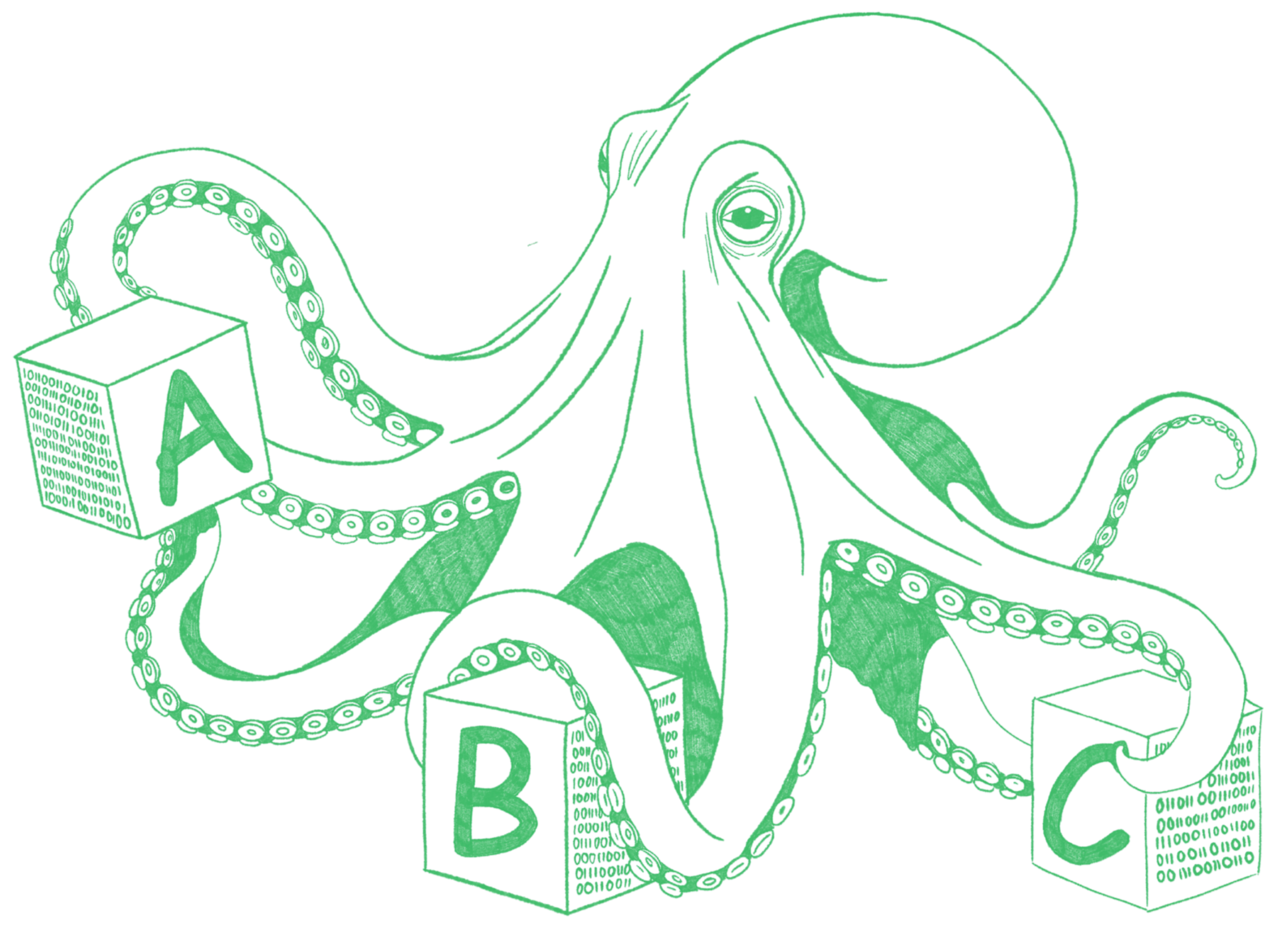
The octopus metaphor compares AI to non-human forms of intelligence in the natural world.
Where does the metaphor commonly appear?
This metaphor is mostly used in academic texts.
What does this metaphor highlight?
The ‘octopus test’ was intended to highlight how a form of intelligence is able to replicate patterns of speech without understanding them. Any ‘meaning’ in what it produces, comes from the human recipient giving meaning in how they choose to interpret it.
However, the more common use highlights the different forms human intelligence and animal intelligence may take, to achieve the same goals such as problem-solving or communication. For example, it compares our ‘centralised’ processing in the brain, to ‘decentralised’ processing in the tentacles of an octopus.
What does this metaphor hide?
Comparing AI to octopus intelligence can lead to us attributing some form of intention or consciousness in its actions. While some writers have used it to suggest directions in which AI can be developed (e.g. different components or tentacles working independently but in tandem), others have used this to push philosophical questions about what we consider ‘true’ intelligence to be.
What makes (or could make) this metaphor work?
Popular media often portrays octopuses as intelligent, able to solve problems (e.g. popular science books like Other Minds: The Octopus, the Sea, and the Deep Origins of Consciousness) and maybe even recognise and form attachments with humans (e.g. in films such as ‘My Octopus Teacher’). While they are very different from us, they are a useful example for metaphors around types of intelligence that are different from ours.
Whose interests does this metaphor tend to serve?
Using this metaphor can be useful to those working in or writing about AI, as it gives the impression that they are developing an intelligence that can be compared to biological intelligence. It allows them to suggest that the reader is the one that needs to widen their definition of intelligence, and can oversell the capabilities of the systems they are talking about.